
The Skull Portraits: A Final Gathering
By Alexander de Cadenet
“Some do not die, we carry our experience of them around inside of us”
The Skull Portraits: A Final Gathering continues a long artistic fascination with mortality and exploring life's meaning. Based on sixty-five individual skulls from a thirty-year archive of forensic and radiographic skull images, the series features 760 newly created and unique skull portraits.
“This is my fifth and final skull portrait series. It gathers together sixty-five specially selected subjects drawn from significant people I've encountered in person throughout my life or subjects of enduring cultural or historical fame where I've accessed radiographic or forensic records of their skulls.[1] Each portrait is titled by an archetype, the subject's identifying name is never assigned directly to the portrait and remains anonymous.
Creating this collection over the past five years has been a way for me to metabolise my own encounters of the subjects. The collection explores both the multi-faceted aspects of the individual psyches presented and as a collective, represents different aspects of my own psyche, exploring the traces the subjects have left upon me either through direct experience or the impact of their symbolic value to me.
[1] Figures associated with the gathering include, Dante Alighieri, Ludwig van Beethoven, Franz Schubert, Lorenzo de Medici, Cosimo de Medici, Giocanni di Bicci de Medici, Cheddar Man, Pharoah Tutankhamun, Kind Richard III, Emperor Charles V, Albert Einstein, Winston Churchill, Adolf Hitler, Marilyn Monroe; Patricia Gucci, Alain de Cadenet, Dame Stella Rimington, Oleg Gordievsky, Yasmin le Bon, Jimmy Cauty, Mike Skinner, Gavin Turk, Stirling Moss, Jake Chapman, Maxime de Cadenet, Chief Mzee Keleina Ole Nchoe of the Massai, Geshe Tashi Tsering and others including mystery subjects.
Alexander de Cadenet, 2026
The series begins with the release of unique one-off NFTs from the collection. These are a mix of both random/computer generated and hand made. The permanence and traceability of blockchain technology offers a fitting medium for works that reflect on time, identity, and what endures.
The next release for the series will be miniatures in the form of stamp artworks and followed by unique painting-prints and collector's cards.
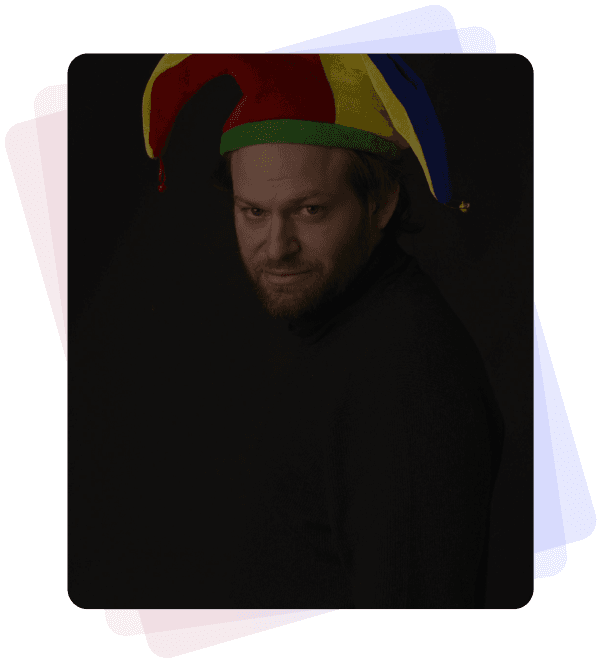
Artist Bio
Alexander de Cadenet is a British artist, making 'skull portraits' for the past thirty years. His work has been exhibited in galleries & museums internationally and received widespread critical acclaim.
He defines his art as "a way to metabolize life and give meaning".
Selected Reviews
In his skull portraits, de Cadenet is using modern art language and processes to communicate the vital spiritual teaching of death in a way that is relevant to our time


The skull portraits tackle both the the idea of mortality and also the question of how we construe human identity
De Cadenet’s Skull Portraits re-energise the long histories of the painted vanitas….There is a ghoulish humour in de Cadenet’s jest with the skull image: these will persist, of course long after we become crematorium dust
"A celebration of existence while simultaneously questioning the value of worldly endeavour."
The 30 Year Anniversary Skull Portrait
“Who's Who Archetypes” Series
Artist Statement
1. Introduction: Celebration of Thirty Years of the Skull Portrait
To mark the 30th anniversary of my 'skull portraits', I've created a new and final series of 520 new portraits based on 60 specially selected subjects. The 60 subjects have been assigned an archetype and although a list of names may indicate who is included, none of the portraits are identified by the subject's name. It's a multi-media project that combines physical artworks together with digital works inscribed on the blockchain with some 'art products' in the pipeline.
2. How have the sixty subjects for the 'archetypes' been selected?
The subjects have been selected either for their deep personal significance to me (various family members, lovers, mentors, inspirators, spiritual teachers, close friends and patrons) or for their resonance within the collective unconscious as iconic figures from history whose x-rays or photos of their skulls I have been given access to via universities, hospital archives, auction houses, national and private archives, museums and private collections. These icons from history include King Richard III, Winston Churchill, Pharaoh Tutankhamun, Marilyn Monroe, Albert Einstein, Beethoven, Schubert, Lorenzo de Medici, Cosimo de Medici and Adolf Hitler.
The 60 skulls making up the “Who's Who Archetypes Series” can be said to be a 'who's who' of my life. The range of archetypes I have selected represents those I have encountered and attracted into my life to date, symbolic of: power, tragedy, genius, seduction, leadership, creativity, betrayal, Machiavellianism, subjectively assigned through what I must be very clear is through my own very personal lens.
3. Personal Memorial: A Dialogue with My Father post mortem
One part of the project is that it is dedicated to the memory to my father, Alain de Cadenet, who died in July 2022. Although our relationship was complex and often challenging, there's no doubt it has impacted my life both positively and negatively. His passing was both a loss and a catalyst for deeper insight into the paradox of inspiration — how it can sometimes be born from a wellspring of pain. I partially credit being in the shadow of my well-known father (and also my famous sister) as being one of the original inspirations behind my skull portraits which first appeared in 1995. The concept was developed as a way to explore my own identity, who I really was; how could I define myself beyond my family name and externally created identifiers over which I had no say, yet remain true to myself?
My father was an obsessive collector and a passionate philatelist. As a child, he imparted to me his thoughts on collecting and what made certain stamps more valuable than others (generally the rarity of errors in printing, watermarking, perforating and low issue numbers / withdrawn issues due to colour or from design changes or postmark and over printing anomalies and varieties). His enthusiasm for stamp collecting was infectious, and these happy memories have returned in symbolic form: each skull portrait in the Archetypes series has been made into a physical stamp.
4. Retrospective Memento Mori + Vanitas Stamps
The project references various artworks from art history: Holbein's Dance of Death woodcuts and The Two Ambassadors portrait in the National Gallery, van Gogh's Skull Smoking a Cigarette and Jan van Eyck's Marital Portrait also in the National Gallery. Duchamp's Boîte en Valise, in its functioning as a mini-retrospective is another conceptual reference. I've also included various other key vanitas themed works from my own work over the years, such as the Life Burgers, Meteorite Sculptures, and Life Line Paintings and some Interconnections Paintings. Several original skull paintings also appear in the series with its variants, contributing to the autobiographical thread. In addition, images of various artists from history are also included within the series as a nod of gratitude towards them; some of the backgrounds also are inspired from various artworks.
The miniature scale of the stamps echoes historic memento mori as seen in miniatures and mourning jewellery such as rings, necklace pendants and broaches, some of which can be seen in the Wallace Collection. Smallness can make the contemplation of the difficult topic of mortality strangely more intimate and manageable.
5. Buddhist Principle of Non-Self
Although the visual language of the portraits does offer insights into some of the subjects' individual characters, on a deeper level, beyond their 'pop' façade, the skull portraits question the traditional role of a portrait to offer insights into a recognisable subject's character. Here, the specific identities of the subjects remain undisclosed. The usual markers for recognisable identity such as, facial features, gender, age, mortality (whether the subject is dead or alive) and even the subjects name are absent and replaced with other identifiers.
Viewers can play a game of hide and seek with what is in front of them if they want to work out who is who or they can simply sit with the mystery. The non-recognisability reflects the Buddhist teaching of anattā (non-self) where there is no fixed, permanent essence behind a person's appearance. Each skull can be seen as not just a portrait of “someone,” but also as a meditation on the formless essence behind all forms.
6. Synchronicity Catalyst and the Collector's Journey
Acquisition of the works is by chance: when you collect a stamp and its corresponding NFT, the allocation is random, like drawing a Tarot card. This imbues the work with a divinatory dimension — a potentially potent synchronicity catalyst in the Jungian sense, where the archetype or group of archetypes you receive might hold personal meaning at that moment in your life.
7. Editions, Formats, and Collector Options
Collectors can acquire single stamps or blocks of 2, 3, 4, 6, 9, or 16, with rarity increasing for larger configurations. Each is framed in a double-sided Perspex display. For a limited time, buyers can also commission a unique one-of-one canvas print of their NFT before the portrait becomes available in non-exclusive form after the period of exclusivity expires.
Once more of the collection is revealed, (which will only happen once portraits are purchased) more traits and interconnections between subjects will become apparent which contributes to the overall picture.
Traits include: different apparel, jewellery, masks, horns, donkey's ears, hairstyles, sayings (by myself, my father and others), double subjects & very occasionally triple subjects, spiritual symbolism (haloes, Quang Yins, Buddhas, images of spiritual teachers and artist-gurus to name a few), a huge variety of backgrounds both digitally created and based on photos, held objects, lazer eyes, occasional abstracted skulls, absent skulls, painting and digital hybrid works, Holbein, Van Eyck and Van Gogh references and previous relevantly themed works by myself and others.
8. The Digital–Analog Intersection
The Archetypes Series sits at the meeting point of two eras. Each portrait is minted as a unique NFT on the blockchain, while also existing as a physical stamp and as a large-scale one-off canvas print. This bridging of media reflects my own position at the intersection of the digital and analogue generations.
9. Conclusion: My Magnum Opus
Drawn from my archive of thirty years of skull portraits and three and a half years in the making, this project is a both an art project, a spiritual practice (of grieving, processing, rising from the ashes) and in a sense also a visual game that challenges the idea of what a portrait can be. It's made up from a constellation of people who have for one reason or another become skull portraits; it is formed of personal and collective memories and reflections, it hides and reveals secrets and incorporates symbols that chart a journey through joy, grief, and transformation. I hope that in time, beyond the immediate initial visual experience, more layers and hidden messages embedded within the series will be revealed.
I consider the “Who's Who Archetypes” series to be my magnum opus to date offering my most intimate reflections on life and art. In my life, I've always looked to art as a way to somehow capture the richness and complexities I've encountered, perhaps this is ultimately a way to overcome the ever-approaching cosmic joke of mortality. I feel a kinship to the artists who painted around their hands on the cave walls thousands of years ago, that is the tradition I see my work as coming from.
Finally, for the opportunity to make these expressions and share my thoughts and feelings for whatever value they may have or will have, even if it ends up just being for myself, I am truly grateful, I would change nothing from how it is. I believe in karma and how an uncorrupted and authentic voice speaks. With this voice many things are possible, even the cleansing of trans-generational trauma and balancing the negativity of false narratives through counter measures. This is the voice of art, a voice that endures and is giving life meaning.